How many screenwriters does it take to change a light bulb?
Answer: Ten.
1st draft. Hero changes light bulb.
2nd draft. Villain changes light bulb.
3rd draft. Hero stops villain from changing light bulb. Villain falls to death.
4th draft. Lose the light bulb.
5th draft. Light bulb back in. Fluorescent instead of tungsten.
6th draft. Villain breaks bulb, uses it to kill hero's mentor.
7th draft. Fluorescent not working. Back to tungsten.
8th draft. Hero forces villain to eat light bulb.
9th draft. Hero laments loss of light bulb. Doesn't change it.
10th draft. Hero changes light bulb.
I am a big proponent of finding a writers or critique group -- it has a two fold benefit. First, it is key in helping the craft of writing - there is nothing better than having supportive colleagues review your work and provide constructing criticism. Second a writers group also provides a wonderful place to be with other writers who understand, emotionally, the writing process. My own critique group is invaluable -- I credit them with helping me hone my writing skills and getting me to where I am today.Writers groups can meet in the real world, as mine did, or can be virtual as well. I've also worked with writers, exchanging manuscripts via email, and that to can be very helpful.
Two months ago, a new online writing community, based in the UK, was launched. Called Quillant, its aims, as shared by found Chris is to -
"recreate the classic writing group over the web. It is a different type of site for writers; it is about developing your work-in-progress with like-minded others and working together towards your aims."
"You create a profile in which you state the type of writer you are -– novelist, poet, playwright,
etc. -– and the genres that you work in. Quilliant.com matches you with similar writers and you form a writing group together. You work collaboratively, exchanging feedback on your work line by line.
I'm all for collaboration, and with technology, perhaps we can do more of it!
Showing posts with label Writing. Show all posts
Tuesday, October 26, 2010
Wednesday, October 20, 2010
Old Truths are Todays Truths
St. Francis de Sales is the patron saint of writers.
Prayer for Writers (taken from Saintly Support: A Prayer for Every Problem)
May the Lord guide me and all those who write for a living. Through your prayers, St. Frances de Sales, I ask for your intercession as I attempt to bring the written word to the world. Let us pray that God takes me in the palm of His hand and inspires my creativity and inspires my success. St. Francis de Sales, you understand the dedication required in this profession. Pray for God to inspire and allow ideas to flow. In His name, let my words reflect my faith for others to read. Amen.
We writers can be our own worst critic - we worry ad nauseum about our writing style, our characters, our plotting technique (or lack thereof); we wonder what our agent thinks of the current manuscript on his/her desk, we worry about getting that first or subsequent book published... the concerns are endless, especially these days, in tough economic times. Success seems harder and harder to attain, obstacle seem insurmountable -- but that's human nature I guess. Then you think back to the good old days when things seemed easier... or did they?
Reading an article by Jennie Nash, in the Huffington Post put things in perspective. In her article, The Making of a Novel: 8 Enduring Truths About Publishing, she talks about a book she's been reading, DEAR GENIUS: THE LETTERS OF URSULA NORDTROM, Nordstom being he children's book editor at Harper's in the 50's & 60's, responsible for some of the world's most enduring children's books -- think the LITTLE BEAR books, Maurice Sendak's masterpieces, Louise Fitzhugh's HARRIET THE SPY and many others. In it she sees 8 Truths that were evident then, as they are today:
- The creative process takes time. Nordstrom's authors started books and stopped them, came up with ideas and abandoned them, turned one idea into another as they searched for the best stories to tell and the best shape for their stories. There are not overnight successes.
- Writers need critics. It's hard to imagine that a book like WHERE THE WILD THINGS ARE was ever anything less than perfect, but Nordstrom picked apart all her writers' stories, questioning every word of the story and every line of art. She was ruthless. And it worked.
- Deadlines loom. Nordstrom is forever writing her authors to ask, "Where are your pages?"
- The sales people matter. Nordstrom travels to Boston and Los Angeles, among other places, to attend sales conferences and pitch the books she's working on. She talks about what illustrations to put in the catalog to capture the sales' people's attention, and how to present the stories in the best light.
- The competition is at your heels. We think of today's marketplace as being wildly competitive, but it wasn't so different back in the day. Nordstrom would go to great lengths to prevent her writers or illustrators taking a contract from a competitive house, and she seemed to hate it when a competitive house came out with a book she considered great.
- It's good to win awards. Nordstrom had many Newbrry and Caldecott winners, and there was always much rejoicing because awards almost always mean bigger sales. Nordstrom often spoke about wanting to help her writers and illustrators make enough money to stop doing their day jobs.
- Books need champions. Nordstrom helped usher a book to publication that included the first-ever homeoerotic scene between teenage boys. (She was a staunch believer that books should never speak down to children -- it's very inspiring.) She wrote several letters to leading psychologists in order to get a quote that would lend the book credibility.
- Making books is satisfying work. What comes through Nordstrom letters is, above all, a sense of absolute joy. She obviously loved her work in a very profound way -- and that love is still the only good reason to do it.
Sunday, October 10, 2010
San Francisco Litquake
Litquake (October 1-9, 2010), San Francisco’s literary festival showcases hundreds of Bay Area writers for a week of readings, discussions, films, cross-media happenings and more
I spent an amazing hour with authors and poets in front of 250 awesome middle grade students earlier this week, at the San Francisco Main Library. I was asked to present at Kidquake, which is a part of San Francisco's annual Literary Festival called Litquake. Kidquake is festival-within-a-festival and was launched in 2004 as organizers decided theyneeded more of a children’s component to the event.
Along with me was a talented husband wife team, Jon Voelkel and Pamela Craik Voelkel who gave an exciting and informative look at their hot new book MIDDLEWORLD, a fast paced adventure story about archaeology and Mayan mythology. The three students from the Creative Writing Department at the Ruth Asawa School of the Arts (SOTA) were unbelievably talented -- just 15-17 years old, their poetry was moving, smart and deeply insightful. They went on to give poetry workshops to many of the students. It reminded me that I loved writing poetry in middle school -- it's wonderful way to have kids connect with themselves by putting thought to paper.
The kids asked amazing questions and were fun to meet!
Tuesday, June 22, 2010
Book Birthday!
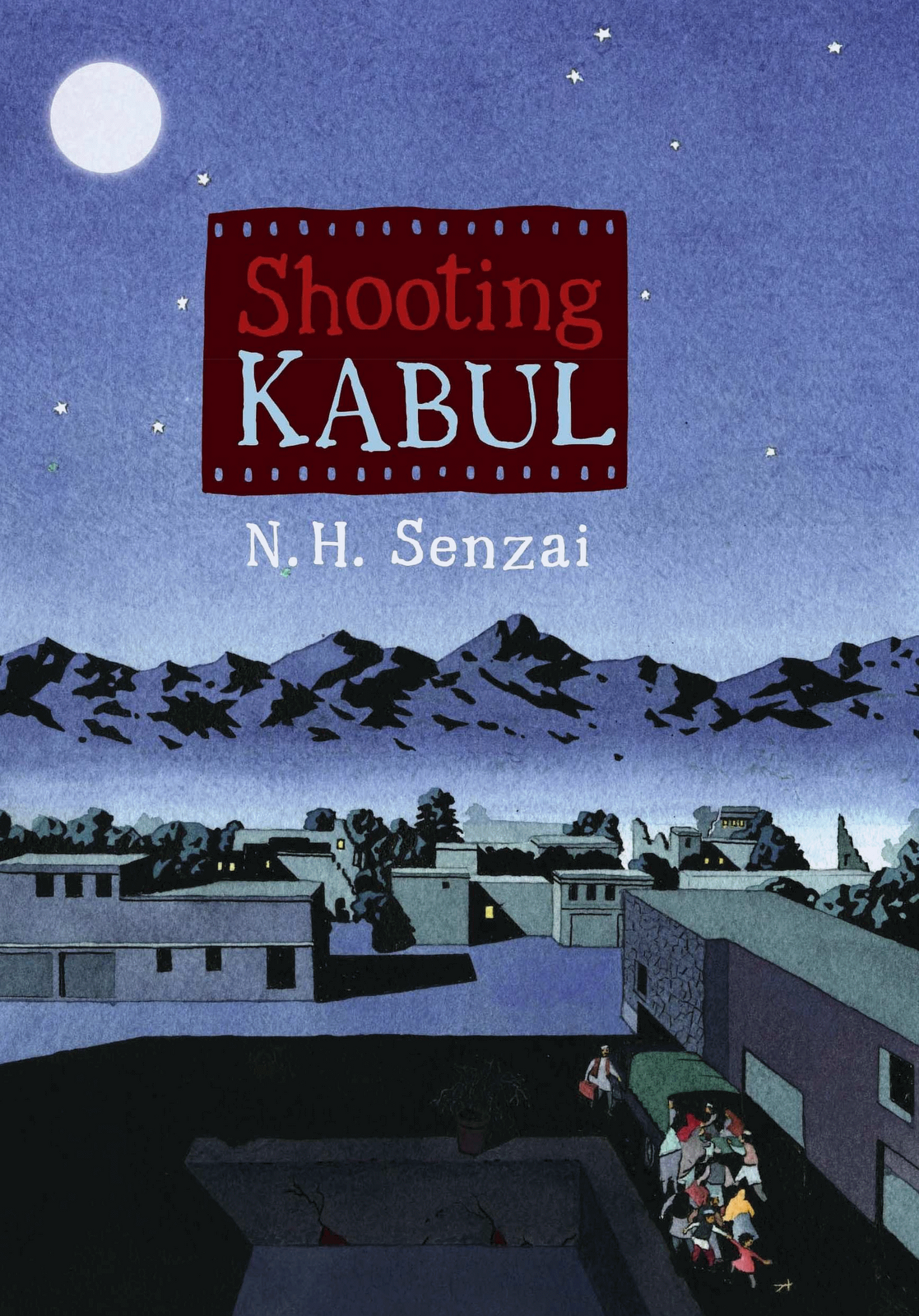
Shooting Kabul officially released today and can be found at your local independent bookseller, Borders, Barnes & Noble, and on-line. The path to publishing has taken two years of hard work, with many people involved - my agent, editor, cover artist, marketing & sales personnel and host of others. Needless to say, I'm beyond excited!
Wednesday, April 28, 2010
What NOT to do!
A writer died and was given the option of going to heaven or hell.
She decided to check out each place first. As the writer descended into the fiery pits, she saw row upon row of writers chained to their desks in a steaming sweatshop. As they worked, they were repeatedly whipped with thorny lashes.
"Oh my," said the writer. "Let me see heaven now."
A few moments later, as she ascended into heaven, she saw rows of writers, chained to their desks in a steaming sweatshop. As they worked, they, too, were whipped with thorny lashes.
"Wait a minute," said the writer. "This is just as bad as hell!"
"Oh no, it's not," replied an unseen voice. "Here, your work gets published."
There is a great deal of information on the web regarding what to do to improve the odds of getting published -- write the best book you can, network with other writers, how to query an agent, how to behave at a writers conference when talking to editors, etc.
Then I saw Penny C. Sansevieri's excellent article in the Huffington Post called Why (Some) Authors Fail and realized that she had excellent suggestions on what NOT to do so you don't sabotage your writing career.
- Not learning enough about the industry -- get to know the market you are in. Learn about who the publishers are, what are they publishing, is the genre your writing hot or fading?
- Not Accepting Feedback -- Get feedback on your work. Getting other people input on your writing (critique partner, editor etc) is a crucial part to any writer's career.
- Not Surrounding Yourself with Enough Professionals -- you need professionals for advice, wisdom, and direction.
- Not Doing Their Research -- refer back to one.
- Not Understanding How New York Publishing Works -- Understand how the publishing industry works, what they are looking for and when.
- Playing the Blame Game - If something goes wrong, own it ( Unless it's really not your fault) and learn from the experience and do better next time.
- Believing in the Unbelievable -- There are no guarantees. No one can promise book sales, fame, or Oprah. Period. End of story. If someone is promising you these things, run, or if the offer seems too good to be true it likely is.
Thursday, February 25, 2010
Protect your IP
E-mail is copyrighted as soon as it is sent or saved.
All the talk of Google and copyright infringement got me thinking about a worry many writers have -- Will our work be stolen? As an intellectual property (IP) consultant, we usually don't do a lot of copyright work -- mainly patents and trademarks. As an author, who's created a piece of IP in the form of a book, I knew that my work was protected once I wrote it down. So copyright protection for a work begins when the work is fixed in some sort of "tangible form." This included writing, typing to paper, and saving it on a computer, but here it is in detail, courtesy of SFWA:
According to the Berne Convention (the international source for copyright law), an original expression is protected by copyright as soon as it is fixed in tangible form. In other words, the moment the words leave your brain and land on paper or the computer screen, you’re protected, and no further action–including registration–is required. The term of copyright guaranteed by Berne is the lifetime of the creator plus 50 years.
Specific copyright laws vary among the more than 90 countries that are signatory to Berne. In the USA, for instance, copyright applies to economic rights only, and the moral rights provisions enacted in other nations, intended to help protect the personality and reputation of the author, don’t exist. Many countries have also extended the term of copyright–in the USA and much of Europe, the term is the creator’s lifetime plus 70 years.
Berne ensures copyright protection without requiring any formalities (such as copyright registration) as a prerequisite to bringing an infringement suit. As a result, most countries have no formal copyright registration process. If you’re a US or Canadian writer, do you need to register? If you’re submitting book-length work to literary agents or publishers, the answer is no. Registration confers no additional copyright protection; all it does is give you legal standing to sue for infringement. But infringement is not something you need to worry about at the submission stage. Theft of unpublished work is so rare as to be functionally nonexistent.
In the USA, there are a number of online services that will register copyright for you with the US Copyright Office, for a fee. You can even purchase software that provides you with addresses and copyright forms. Don’t waste your money–it isn’t difficult to register copyright yourself, and it will cost you a good deal less than the services (currently, registration costs between $35 and $65, depending on whether you register online or on paper). For freelancers and others wanting to register more than one piece, the US Copyright Office offers a multiple-registration option.
So don't worry... your work in protected!
All the talk of Google and copyright infringement got me thinking about a worry many writers have -- Will our work be stolen? As an intellectual property (IP) consultant, we usually don't do a lot of copyright work -- mainly patents and trademarks. As an author, who's created a piece of IP in the form of a book, I knew that my work was protected once I wrote it down. So copyright protection for a work begins when the work is fixed in some sort of "tangible form." This included writing, typing to paper, and saving it on a computer, but here it is in detail, courtesy of SFWA:
According to the Berne Convention (the international source for copyright law), an original expression is protected by copyright as soon as it is fixed in tangible form. In other words, the moment the words leave your brain and land on paper or the computer screen, you’re protected, and no further action–including registration–is required. The term of copyright guaranteed by Berne is the lifetime of the creator plus 50 years.
Specific copyright laws vary among the more than 90 countries that are signatory to Berne. In the USA, for instance, copyright applies to economic rights only, and the moral rights provisions enacted in other nations, intended to help protect the personality and reputation of the author, don’t exist. Many countries have also extended the term of copyright–in the USA and much of Europe, the term is the creator’s lifetime plus 70 years.
Berne ensures copyright protection without requiring any formalities (such as copyright registration) as a prerequisite to bringing an infringement suit. As a result, most countries have no formal copyright registration process. If you’re a US or Canadian writer, do you need to register? If you’re submitting book-length work to literary agents or publishers, the answer is no. Registration confers no additional copyright protection; all it does is give you legal standing to sue for infringement. But infringement is not something you need to worry about at the submission stage. Theft of unpublished work is so rare as to be functionally nonexistent.
In the USA, there are a number of online services that will register copyright for you with the US Copyright Office, for a fee. You can even purchase software that provides you with addresses and copyright forms. Don’t waste your money–it isn’t difficult to register copyright yourself, and it will cost you a good deal less than the services (currently, registration costs between $35 and $65, depending on whether you register online or on paper). For freelancers and others wanting to register more than one piece, the US Copyright Office offers a multiple-registration option.
So don't worry... your work in protected!
Monday, February 22, 2010
Celebristories
The latest celebrily entrant into children's writing is Tori Spelling with PRESENTING TALLULAH. She is the latest addition to a string of celebrities turning their hand to writing - From Madonna to Kylie, John Travolta, Bill Cosby, Julie Andrews, Jay Leno and Whoopi Goldberg, A-list actors, comics and singers are reinventing themselves as children's authors.
Celebs writing children's book is in itself not new. Shirley Temple wrote a series of books1930s, and Elizabeth Taylor wrote NIBBLES AND ME in her teens about a pet squirrel. In the 50s, Broadway star Kay Thompson wrote ELOISE, about a little girl who lives in New York's Plaza hotel. Even politicians like President Jimmy Carter wrote THE LITTLE BABY SNOOGLE-FLEEJER, a story about a disabled boy who is befriended by a monster known as, yes, a snoogle-fleejer.
Some efforts are quite good, but others... not so much. As Anita Silvey, author of 100 BEST BOOKS FOR CHILDREN puts it: "Celebrity books are one of the great negative features of children's publishing in the 21st century. If I were still a publisher, as I used to be, none of these manuscripts would make it past my slush pile." Okay, maybe that's a bit harsh, but many children's authors, those who've burned the midnight oil, put in endless hours and struggled through the traumas of getting published, feel a tad bit resentful that celebrities get glittering book deals based seemingly on their name alone. Esteemed writer, Jane Yolen bemoans the fact that celebrity children's books command large advances, get lots of publicity and generally muscle the smaller authors out of bookshelf space at your local shop.It seems as if being famous can give you the leg up for anything, even getting a lucrative book contract.
Well, can we blame publishers? At the end of the day they are in the business of selling books to make the bottom line, keep their jobs and their shareholders happy. If they have a product by a well known name, they are guaranteed sales (for the most part). Madonna's THE ENGLISH ROSES instantly became the biggest and fastest selling book ever by a first-time children's author. The book debuted at number one on the New York Times Bestsellers List for children's picture books in 2003 and remained there for eighteen weeks. Combined, Madonna's first three children's books have sold over one and a half million copies worldwide.
So maybe we shouldn't blame the celebrities or the publishers but consumers - they're the ones buying them.
Celebs writing children's book is in itself not new. Shirley Temple wrote a series of books1930s, and Elizabeth Taylor wrote NIBBLES AND ME in her teens about a pet squirrel. In the 50s, Broadway star Kay Thompson wrote ELOISE, about a little girl who lives in New York's Plaza hotel. Even politicians like President Jimmy Carter wrote THE LITTLE BABY SNOOGLE-FLEEJER, a story about a disabled boy who is befriended by a monster known as, yes, a snoogle-fleejer.
Some efforts are quite good, but others... not so much. As Anita Silvey, author of 100 BEST BOOKS FOR CHILDREN puts it: "Celebrity books are one of the great negative features of children's publishing in the 21st century. If I were still a publisher, as I used to be, none of these manuscripts would make it past my slush pile." Okay, maybe that's a bit harsh, but many children's authors, those who've burned the midnight oil, put in endless hours and struggled through the traumas of getting published, feel a tad bit resentful that celebrities get glittering book deals based seemingly on their name alone. Esteemed writer, Jane Yolen bemoans the fact that celebrity children's books command large advances, get lots of publicity and generally muscle the smaller authors out of bookshelf space at your local shop.It seems as if being famous can give you the leg up for anything, even getting a lucrative book contract.
Well, can we blame publishers? At the end of the day they are in the business of selling books to make the bottom line, keep their jobs and their shareholders happy. If they have a product by a well known name, they are guaranteed sales (for the most part). Madonna's THE ENGLISH ROSES instantly became the biggest and fastest selling book ever by a first-time children's author. The book debuted at number one on the New York Times Bestsellers List for children's picture books in 2003 and remained there for eighteen weeks. Combined, Madonna's first three children's books have sold over one and a half million copies worldwide.
So maybe we shouldn't blame the celebrities or the publishers but consumers - they're the ones buying them.
Tuesday, February 2, 2010
Keep Your Day Job
Writing is the hardest way of earning a living, with the possible exception of wrestling alligators - Monica Ali
A friend of mine teaches middle school and one of her students, an aspiring author, wanted to interview a writer for a paper. Of course, I said yes… moments later I had thoughts of… Egad… she wants ADVICE? From me? I don’t even know what a dangling participle or a preposition is (really, my critique group had to tell me)
Well she rang me a few days later and we sat down to chat. We covered the usual things – where did I grow up (San Francisco, Saudi Arabia, London), when did I want to be a writer (age eleven), who were my literary influences (innumerable), so on and so forth. Then she asked me what I had studied in college. I told her accounting. She paused, a bit confused. (I could tell she was expecting me to say English, creative writing or literature)
Uh, why? Didn’t you want to be a writer?
I told her yes, I did, but I was also passionate about new technologies and products, and the reality of it was that a job in the business field actually gave you a dependable paycheck. On the end of the line I heard dead silence… I could hear dreams shattering. I felt terrible. I softened my approach and told her the realities of becoming a published author – the statistics on actually finishing a novel (a novel that is well written and the material is hot for the current market), landing an agent, AND getting a deal with the publisher are pretty miniscule. AND, if you do all that, as a debut author you will probably not make enough to pay your bills.
Sad… but true. There are very few JK Rowling, Stephanie Meyers and other overnight phenomenas out there – many of these writers, we later learn, also paid their dues and built successful writing careers, one book at a time, over many years. So, I told her, you could one day become an amazing, successful author who does manage to do it for a living, but it will take time – so get a day job in something else you feel passionate about. This is what Tamora Pierce told me - it took her a couple of years before she gave up her day job and wrote full time.
I told the student that her day job could still be in the field of writing – she could go into publishing, technical writing, or maybe even become a librarian. But honestly, I told her go to college and pursue a career in something else. I don’t know if I convinced her or not, but she said that that made sense. I told her that the majority of writers I know have a day job. Some make a decision that writing is all they will do, and that’s okay, but usually there is a spouse working or a trust fund involved. Writing, first and foremost (for me anyway) is about personal fulfillment. If it turns out that you become published and your book does well, that is the icing on the cake. And then, if you can write full time, that is truly awesome.
Wednesday, January 27, 2010
Inkpop
Since its soft launch in 4th quarter 2009, inkpop already has more than 10,000 members and nearly 11,000 submissions, including novels, poems, essays, and short stories. The visitors are teens ages 13 and older, from 109 different countries and territories.
Boy, I wish I had this when I was a teen...
I started my first novel in Mrs. Cochran's Novel Writing Club, back in middle school. The only resources we had at our disposal (remember, we were living out in the middle of the desert in Saudi Arabia) was Strunk & Whites ELEMENTS OF STYLE, a prodigous school library, our teachers and our imagination for ideas. Now look at the resources available to young writers fingertips...
Inkpop, from HarperCollins Publisher's teen publishing unit, is a platform aimed at young readers and writers. It's a a combination of community publishing features, user-generated content, and social networking elements. There are thousands of young writers out there (Christopher Paolini wrote Eragon at fifteen) who now have the opportunity to showcase their work.
The launch of inkpop continues Harper Collins overall digital strategy designed to build and expand its direct-to-consumer business. Inkpop will be the anchor of HarperCollins's ongoing teen strategy, enabling the company to have a continuous dialogue directly with its audience to determine what the community cares about, as well as an unfiltered look at what's in and what's out.
Monday, January 25, 2010
Finding Community
The writing profession is reeking with this loneliness. All our lives we spend in discoursing with ourselves. . . . The loneliest people in the world we writers are. Except that, while we are conversing and laughing with ourselves, we manage to shed our loneliness . . . to scatter it as we go along - Fred Hobson
When I got serious about writing, that I was going to sit down and complete an entire book, no matter how painful, I realized that I needed, no craved, the company of other writers. I wanted to know how they had scrapped together their determination, got serious and well, written a book. The first thing I did was go to Google – always dependable, honest, and factual. On-line I found an amazing array of resources for writers. In particular I found Verla Kay’s Blue Board, an amazing waterhole for writers at all stages of their careers. It’s a place where people share information, commiserate, talk about publishers, agents, the writing process, good news and bad. There are many sites that offer this sense of community – She Writes, Goodreads, Jacketflap, SCBWI, Redroom and others. The information I’ve learned over the years from other writers has been invaluable – it’s guided me in choosing my agent, researching publishers, understanding contracts and innumerable other things. So if you’re feeling a little lonely, writing away in your corner, jump on the information super highway and find some friends.
Labels:
Critique Group,
Getting Published,
SCBWI,
Writing
Friday, December 18, 2009
Burka Barbie
Barbie has had more than 80 careers -- everything from a rock star to a paleontologist to a presidential candidate.
A friend forwarded me a recent article – Muslim Wold: Barbie’s 50th Anniversary Islamic Makeover. According to the article:
“Wearing the traditional Islamic dress with a mesh eyehole, she went under the hammer along with 500 other Barbie dolls dressed in unique outfits at an auction in Florence, Italy, at the renowned auction house Sotheby’s to raise funds for Save the Children. The auction, held in late November, was part of the celebrations put on for Barbie this year as she celebrated her 50th anniversary. In her new look, Barbie also appeared in a line of stylish turquoise, lime-green, orange-colored burkas and regular head-covering Muslim veil, known as hijab. The set of multicultural Barbies, including the burka-clad one, was dressed by the Italian designer Eliana Lorena in a project backed by Barbie's owner, Mattel.“
I paused to collect my thoughts – so many were running through my brain – both about Barbies and Burkas. Barbie is actually a central character in my novel, SHOOTING KABUL. She is the beloved doll of Mariam, my protagonist, Fadi’s, younger sister. Mariam, like me, grew up playing with Barbie, impervious to all the body image controversies she is associated with. Part of the fun was dressing her up. Now the burka -- The whole subject of women covering is a loaded issue – it is seen as a sign of oppression, especially by those in the west. (Though on the counter side, Naomi Wolf would argue that women in the West are oppressed by body images as well – it isn’t easy being told you need to be a size zero and in a bikini.) But for me, at the end of the day, it is about CHOICE. Plain and simple. Women should have a choice to do what they want with their bodies – cover it up or wear a bikini. If Barbie wants to wear a bikini, she should, and if she feels the need to conserve her modesty, the burka should be her choice of fashion.
Of course, the auction drew controversy – sigh, wasn’t that expected?
Pro: Fan Angela Ellis, who has a collection of more than 250 Barbie dolls, thought it was a good idea to introduce a veiled Barbie. That way, children living in conservative Islamic countries would have a doll they could identify with. “Bring it on, Burka Barbie," Britain’s the Sun newspaper quoted her as saying. "This is really important for girls, wherever they are from, they should have the opportunity to play with a Barbie that they feel represents them.”
Con: Critics such as Barbara Kay in Canada slammed Barbie’s Muslim dress as a “symbol of oppression” and ripped Ellis’ commentary in an article recently published in Canada’s the National Post newspaper.
Barbie’s choice is at issue, and at the end of the day, she should be able to wear whatever she wants to…. Oh, and Happy Birthday.
Monday, December 14, 2009
Pencil to Paper
Pencils didn't have erasers on them until 100 years ago because teachers felt they would encourage children to make mistakes.
Ask a writer when they started writing and most will pause a moment, slightly confused and cross eyed. You can see their mind whir and churn, travelling back to the moment they were compelled to pick up a pencil and put it to paper– it could have been a poem, an essay, a story, or diary entry. For the most part, most writers have, well, written, since they were kids. Once my elementary school librarian, Mrs. Hackworth, introduced me to reading, I was addicted to the written word, and soon after I was also writing shorts stories and poetry. We were lucky to have a writing competition at our school, Jubail Academy, and over the years I won quite a few of the prizes. In the 9th grade, our language arts teachers, Mrs. Cochrane started a novel writing club and six eager students (including moi) struggled with our literary masterpieces. It taught us that if we were organized and perseverant, we could actually write a book.
Many writers have a folded stapled sheaf of dog-eared pages – their first book, lying around somewhere. I wrote mine in the 3rd grade and it is titled “The Home Work Machine”, accompanied by crayon illustrations. Thankfully, I realized early on that drawing was not my strong suite. So the writing bug catches early, and for many it is an affliction of a lifetime. Unfortunately (or fortunately) there is no known cure…
Saturday, December 5, 2009
ARCs Have Landed
The largest publisher in the United States is The U. S. Government Printing Office.
Yesterday was a momentous day for me -- my ARCs, or advance reader copies, of SHOOTING KABUL showed up in the mail. With my heart hammerring in the vicinity of my throat, I opened the box and pulled out a copy. Words really can't describe how amazing it is to see your mss in book format... so I won't used any. I'll let a picture show instead.
Wednesday, December 2, 2009
Making Librarians Cry
Library, Here is where people, One frequently finds, Lower their voices, And raise their minds — Light Armour McGraw-Hill, 1954, Richard Armour
Souce: Cartoonspeedbump.com
I confess – in the last few months, I've made my school librarians cry. But let me back up and explain -- the back-story, so to speak.
Growing up in Saudi Arabia, part of an international expat community, our school, Jubail Academy was the center of our childhood universe. It was more than just a school – it was where we had our boy/girl scout meetings, sporting events, photo-club meetings, reading challenges, knowledge bowl sessions…. You get the picture. It was a beehive of activity, one supported and encouraged by the wonderful teachers and staff. A hub within the school was the two libraries, one serving the elementary school, the other junior high (the more racy stuff was on the junior high side – sweet valley high anyone?)
I, as Neil Gaiman said in his Newberry acceptance speech, was also a “feral child raised among the stacks.” I lived in the library, before and after school and during lunch. Although libraries are not child care facilities (and Neil says) our librarians were nurturing beings – always there with a smile, encouragement and good advice. Mrs. Hackworth, the librarian on the elementary side, taught me the mysteries of the Dewey Decimal system and let me help catalog books. It was here I discovered Roald Dahl, Beverley Cleary and Judy Blume. Mrs. Murray manned the junior high section and introduced me to books I would never have picked up on my own. She helped me do research for projects and questioned me when I needed questioning. Both embedded in me the passion for the written word and set me on the path to becoming a writer.
I met Mrs. Murray again at our Jubail Academy reunion, held this past summer in San Francisco. Her husband had been my algebra teacher and when I told them I’d written a children’s book and dedicated it to her, she cried. I didn’t mean for her to, it just happened. I later emailed Mrs. Hackworth a copy of the manuscript and told her she too was in my dedication. These past few days she read the book out loud to her husband, who was my reading teacher in the 5th grade. Her email mentioned how she took “emotion breaks” while reading – one of the greatest compliments a writer can receive. So thank you both for being the best librarians we could have.
I, as Neil Gaiman said in his Newberry acceptance speech, was also a “feral child raised among the stacks.” I lived in the library, before and after school and during lunch. Although libraries are not child care facilities (and Neil says) our librarians were nurturing beings – always there with a smile, encouragement and good advice. Mrs. Hackworth, the librarian on the elementary side, taught me the mysteries of the Dewey Decimal system and let me help catalog books. It was here I discovered Roald Dahl, Beverley Cleary and Judy Blume. Mrs. Murray manned the junior high section and introduced me to books I would never have picked up on my own. She helped me do research for projects and questioned me when I needed questioning. Both embedded in me the passion for the written word and set me on the path to becoming a writer.
I met Mrs. Murray again at our Jubail Academy reunion, held this past summer in San Francisco. Her husband had been my algebra teacher and when I told them I’d written a children’s book and dedicated it to her, she cried. I didn’t mean for her to, it just happened. I later emailed Mrs. Hackworth a copy of the manuscript and told her she too was in my dedication. These past few days she read the book out loud to her husband, who was my reading teacher in the 5th grade. Her email mentioned how she took “emotion breaks” while reading – one of the greatest compliments a writer can receive. So thank you both for being the best librarians we could have.
Librarians are amazing – go hug yours today.
Labels:
Getting Published,
Librarians,
Library,
Reading,
Writing
Monday, November 30, 2009
Live 2k10
Euclid is the most successful textbook writer of all time. His Elements, written around 300 B.C., has gone through more than 1,000 editions since the invention of printing
The Class of 2k10 (debut authors with books coming out in 2010, of which I'm one) just launched their website. The group includes 23 authors with fantastic Young Adult and Middle Grade books, covering a gamut of genres -- mystery, paranormal, fantasy, romance, contemporary... The Class of 2K was founded by Greg Fishbone in 2007 with the idea that debut authors could band together to make their publication journey easier. This years group hopes to continue in footsteps of our predecessors. Check out titles that will be appearing in your local bookstore soon.
Thursday, November 19, 2009
Amazoned
The volume of water in the Amazon river is greater than the next eight largest rivers in the world combined and three times the flow of all rivers in the United States.
Writing and completing a novel is phenomenally fulfilling, personally. Having your agent sell your book is exhilarating and numbing at the same time -- someone loves your book as much as you do -- loves it enough to acquire it. Seeing a galley of your novel on its way to becoming a finished product is an emotional rollercoaster -- it seems like it was only months before it had been a figment of your imagination. But being Amazoned, that took me by surprise -- Seeing what once inside your head now listed for pre-order is indescribable -- its a little like standing in your underwear in public. You are fully exposed -- but in a good sort of way.
Monday, November 16, 2009
Class of 2K10 Book Trailor
Bestselling books that got rejected - a lot - before they made history: Dune by Frank Herbert, Harry Potter and the Philosopher's Stone by J.K. Rowling, Life of Pi by Yann Martel, The Diary of a Young Girl by Anne Frank, The Tale of Peter Rabbit by Beatrice Potter
2K10, a group of debut novelists with Young Adult and Middle Grade Books coming out in 2010, just launched their book trailor. So many great reads!
Tuesday, November 3, 2009
Book Galley
“There is no greater agony than bearing an untold story inside you.” – Maya Angelou
I got this in the mail today ---
I opened with eager anticipation and wasn't dissapointed... many long months ago, the words to SHOOTING KABUL formed in my mind and landed in a word document on my laptop. After a round of edits, here it is, a book galley, close to final book format, copyedited and typeset. Galleys are put together for multiple reasons -- they are given to sales and marketing folks, sent to reviewers, and to solicit reviews from magazines, newspapers and bloggers. They are not the finished copy of the book, and can still be tweaked.
It's been an amazing journey so far, the road to publishing, with lots more to come. I'll leave you with the first page of the novel.
Monday, October 26, 2009
Writer Connections
There are three rules for writing the novel. Unfortunately, no one knows what they are. -W. Somerset Maugham
Writing is a lonely pursuit and you can spend years, staring at your computer, creating imaginary worlds in your mind, translating them onto paper. When you’re brave enough, you venture out and meet other writers, the only other souls who understand what it is exactly that you do (and why you aren’t on the NYT best seller list YET) One of the best organizations for connecting and networking with writers is the SCBWI -- the Society for Children’s Book Writers and Illustrators. Our local chapter is headed by the amazing duo of Margaret Speaker Yuan and Colette Weil. I met them at a writer’s retreat they put together four years ago and their support and advice over the years has been incalculable.
This past Saturday a group of 100 plus authors came together at the SCBWI Fall Conference hosted at Mills College in Oakland. The keynote speaker, Stephen Mooser, is President and co-founder of SCBWI. His talk, Getting Young Readers to Laugh, was a practical approach to writing for young readers and he outlined ways to inject humor into your work – which has helped him get the attention of boy readers and kept them reading. Kelly Sonnack, a literary agent from Andrea Brown Literary Agency, spoke about Capturing a Child’s Voice. She brought great samples of how to get into a child’s head and write from their perspective – voice is one of the toughest things to nail down – it’s like riding a bike, difficult to figure it out, but once you do, it’s like you always knew how. Voice is what gives your writing it authentic fingerprint; it animates your characters with a unique personality that is an extension of your point of view. It grabs the reader’s attention hooks them into your story.
Sarah Shumway, Senior Editor at Harper Collins highlighted the importance of First Pages: Tips and Techniques. She discounted common convention that your book needs to jump right into action, or meat of the story; slower starts are okay as long as they hook the reader in and keep them reading. She read and critiqued a group of pages turned in by conference attendees. Grammatical mistakes are a sure fire way to get Sarah to stop reading – if you can’t use spell check she’s not going to waste time on your manuscript.
Luan Stauss, owner of Laurel Bookstore, provided awesome insight on how to work with local booksellers to promote your books. As writers, our job is to write great books, and in turn a booksellers job is to sell your books, which benefits both. According to Luan, Indies can support authors through hosting author events and handselling your book. Book an appointment with your local bookstore so that they know about you, their local author – it’s a win-win situation!
Barbara Fisch and Sarah Shealy have twenty years experience in the publishing industry and launched Blue Slip Media in March 2009. They gave great tips through their talks -- Niche Publicity and Marketing — How to Tap Unusual Markets and What to expect when you’re expecting . . . a Book: How to Partner with Your Publisher in Marketing Your "Baby". At a time when publishers are stretched thin and have limited resources to spend on marketing campaigns, it falls on authors to get creative – They spoke about effective press releases, targeted mailing lists, niche and local market outreach, and event planning. They stressed the importance of pursuing online media (Facebook, blogs, twitter, etc.) and tapping into personal networks. One of the best pieces of advice they gave was to act professional and Be Nice – it’s easier to catch flies with honey rather than vinegar!
So if you’re a writer, lurking at the back at your local café, isolated, alone, I urge you to join a writers group, such as the your local chapter of SCBWI. You’ll meet great people and have the opportunity to attend interesting, informative events.
Labels:
Agents,
Conference,
Editors,
Indie Booksellers,
Marketing,
SCBWI,
Writing
Wednesday, October 7, 2009
Writerology
The Hawaiian alphabet has only 12 letters
All writers have their strengths and weaknesses. Some create haunting, beautiful scenes – ones you literally fall into when you open their book. Others create passionate, multifaceted characters you love, hate, admire, love and related to. Some can’t plot to save their lives, others can plot but can’t find their voice (oh that mysterious thing that I still can’t figure out either.) My strength may be organization and plot development, but my greatest weakness, alas, is my grammar. I was an Accounting and Business major in college and took, like, one comparative writing class. I still don’t know what a dangling participle is. But the good news is that I have an excellent critique group with two English majors who sort me out. Plus my amazing editor of course (poor her). So the trick is to know what your good at, work hard at what you aren’t, and find a great critique group, or partner, who can point out your genius as well as your inadequacies.
There really is one universal rule for writing that all writers agree to: BIC = Butt In Chair. At the end of the day, in order to produce your literary work of genius, you must actually sit and DO it.
Now, how you DO it, according to standard writerly belief, falls into two camps – either you are a Panster or a Plotter. The first group, the Pansters, sit down, crack their knuckles, and let it rip -- they allow their creative juices to roar forth, spilling onto the page. The characters in their head come alive and lead them down a merry path, unfolding the story as they go along. The second group, the Plotters, sit down and well, plot. They make outlines, bar graphs, charts, do character studies and perform extensive research.
Personally, I don’t think it’s that black and white – successful author are shades of gray in-between, lying either towards the Panster or Plotter part of the bell curve. You kind of need to have both in some degree - allow yourself to think freely, come up with amazing ideas… then create some form of structure that allows you get from beginning to end without falling off the deep end. Let me tell you, many a book has begun then wandered off into the dark woods, never to be heard of again.
I fall on Plotter end of the spectrum. Ideas percolate in my head all the time, and I take notes. I have random interest in various topics and I find that these ideas sneak into a story or character idea. But then, okay, so I’m a bit anal (it’s the accountant in me) I make dozens of spreadsheets outline chapters, develop character types, generate subplots and jot down critical elements. One of my favorite things to do is research. I love finding out the history, back-story and details of what I’m writing about, and although I may only use 5% of it in my book, the journey of discovering new information is immensely satisfying. BUT I’m always open to change, so if my character decides he is now a girl instead of a boy, or the plot needs a radical twist, I accommodate it into my outlines.Now, how you DO it, according to standard writerly belief, falls into two camps – either you are a Panster or a Plotter. The first group, the Pansters, sit down, crack their knuckles, and let it rip -- they allow their creative juices to roar forth, spilling onto the page. The characters in their head come alive and lead them down a merry path, unfolding the story as they go along. The second group, the Plotters, sit down and well, plot. They make outlines, bar graphs, charts, do character studies and perform extensive research.
Personally, I don’t think it’s that black and white – successful author are shades of gray in-between, lying either towards the Panster or Plotter part of the bell curve. You kind of need to have both in some degree - allow yourself to think freely, come up with amazing ideas… then create some form of structure that allows you get from beginning to end without falling off the deep end. Let me tell you, many a book has begun then wandered off into the dark woods, never to be heard of again.
All writers have their strengths and weaknesses. Some create haunting, beautiful scenes – ones you literally fall into when you open their book. Others create passionate, multifaceted characters you love, hate, admire, love and related to. Some can’t plot to save their lives, others can plot but can’t find their voice (oh that mysterious thing that I still can’t figure out either.) My strength may be organization and plot development, but my greatest weakness, alas, is my grammar. I was an Accounting and Business major in college and took, like, one comparative writing class. I still don’t know what a dangling participle is. But the good news is that I have an excellent critique group with two English majors who sort me out. Plus my amazing editor of course (poor her). So the trick is to know what your good at, work hard at what you aren’t, and find a great critique group, or partner, who can point out your genius as well as your inadequacies.
Subscribe to:
Posts (Atom)