Showing posts with label Getting Published. Show all posts

Friday, November 19, 2010

Diamond in the Slush

HARRY POTTER AND THE DEATHLY HALLOWS was released on July 21, 2007, and sold 11 million copies on the first day of its release, breaking Rowling's earlier records for the fastest selling book of all time.
The Deathly Hallows, Part One, hit the movie theaters as of midnight last night. As I plan my night out to see it, I can't help but remember that J.K. Rowling had to deal with a lot of rejection before Alice came into her life. Who is Alice? She was Bloomsbury Publishing's chief-executive, Nigel Newton, eight-year-old daughter, who read the manuscript and convinced her father of its brilliance.It was Alice who saw the diamond in the slush pile, which led her father to eventually acquire the book, sending J.K. Rowling £2,500. Not a bad investment since the Potter series went on to sell 400 million copies.

Such gems are often lost in slush piles and most writers slog through to find their route to publication. When Stephen King submitted his first book he was told: "We are not interested in science fiction which deals with negative utopias. They do not sell." His novel CARRIE went on to sell more than one million copies and established his career. George Orwell's ANIMAL FARM was rejected as a cute kids' fairy tale and was told by an publisher that "It is impossible to sell animal stories in the USA.'' James Joyce's collection of short stories Dubliners was turned down by 22 publishers before it was published by Grant Richards. THE DIARY OF ANNE FRANK was dismissed when a publisher noted: "The girl doesn't, it seems to me, have a special perception or feeling which would lift the book above the curiosity level.'' When William Golding tried to publish LORD OF THE FLIES, a reader from Faber & Faber famously branded it as "an absurd and uninteresting fantasy which was rubbish and dull".

Many of today's best known authors have had to persevere in order to get to where they are today. I'm sad to see Harry Potter coming to its end, but am hopeful other diamonds will be pulled out the slush for our enjoyment!

Wednesday, October 20, 2010

Old Truths are Todays Truths

St. Francis de Sales is the patron saint of writers. 
Prayer for Writers (taken from Saintly Support: A Prayer for Every Problem)
May the Lord guide me and all those who write for a living. Through your prayers, St. Frances de Sales, I ask for your intercession as I attempt to bring the written word to the world. Let us pray that God takes me in the palm of His hand and inspires my creativity and inspires my success. St. Francis de Sales, you understand the dedication required in this profession. Pray for God to inspire and allow ideas to flow. In His name, let my words reflect my faith for others to read. Amen. 
We writers can be our own worst critic - we worry ad nauseum about our writing style, our characters, our plotting technique (or lack thereof); we wonder what our agent thinks of the current manuscript on his/her desk, we worry about getting that first or subsequent book published... the concerns are endless, especially these days, in tough economic times. Success seems harder and harder to attain, obstacle seem insurmountable -- but that's human nature I guess. Then you think back to the good old days when things seemed easier... or did they? 
Reading an article by Jennie Nash, in the Huffington Post put things in perspective. In her article, The Making of a Novel: 8 Enduring Truths About Publishing, she talks about a book she's been reading, DEAR GENIUS: THE LETTERS OF URSULA NORDTROM, Nordstom being he children's book editor at Harper's in the 50's & 60's, responsible for some of the world's most enduring children's books -- think the LITTLE BEAR books, Maurice Sendak's masterpieces, Louise Fitzhugh's HARRIET THE SPY and many others. In it she sees 8 Truths that were evident then, as they are today:
  1. The creative process takes time. Nordstrom's authors started books and stopped them, came up with ideas and abandoned them, turned one idea into another as they searched for the best stories to tell and the best shape for their stories. There are not overnight successes.
  2. Writers need critics. It's hard to imagine that a book like WHERE THE WILD THINGS ARE was ever anything less than perfect, but Nordstrom picked apart all her writers' stories, questioning every word of the story and every line of art. She was ruthless. And it worked.
  3. Deadlines loom. Nordstrom is forever writing her authors to ask, "Where are your pages?"
  4. The sales people matter. Nordstrom travels to Boston and Los Angeles, among other places, to attend sales conferences and pitch the books she's working on. She talks about what illustrations to put in the catalog to capture the sales' people's attention, and how to present the stories in the best light.
  5. The competition is at your heels. We think of today's marketplace as being wildly competitive, but it wasn't so different back in the day. Nordstrom would go to great lengths to prevent her writers or illustrators taking a contract from a competitive house, and she seemed to hate it when a competitive house came out with a book she considered great.
  6. It's good to win awards. Nordstrom had many Newbrry and Caldecott winners, and there was always much rejoicing because awards almost always mean bigger sales. Nordstrom often spoke about wanting to help her writers and illustrators make enough money to stop doing their day jobs.
  7. Books need champions. Nordstrom helped usher a book to publication that included the first-ever homeoerotic scene between teenage boys. (She was a staunch believer that books should never speak down to children -- it's very inspiring.) She wrote several letters to leading psychologists in order to get a quote that would lend the book credibility.
  8. Making books is satisfying work. What comes through Nordstrom letters is, above all, a sense of absolute joy. She obviously loved her work in a very profound way -- and that love is still the only good reason to do it.

Tuesday, June 22, 2010

Book Birthday!


Shooting Kabul officially released today and can be found at your local independent bookseller, Borders, Barnes & Noble, and on-line. The path to publishing has taken two years of hard work, with many people involved - my agent, editor, cover artist, marketing & sales personnel and host of others. Needless to say, I'm beyond excited!

Friday, May 28, 2010

Rankingly Obsessed

Amazon has sold more than 7.5 million unique titles at this point, and rankings indicate a title must sell at least one copy a year to remain above a rank of two million - Morris Rosenthal, Foner Books 
Getting your book published is a exciting, awesome journey, but once it hits the shelves, you might think that writers relax and wait for the royalty checks to arrive in the mail... alas, it's not true. I'd say the majority of the writers I know start obsessing (at least a little) about sales. The first place they look is at their Amazon sales rankings. Your Amazon sales rank is a number that says how many other titles sold more than your book. The smaller the number, the better the sales. The number is re-computed daily (for obsessors who need to know)
 For example, a major publisher tracked 25 titles over a six month period, correlating the weekly Amazon sales rank with actual reported sales from Amazon. Here is what they found correlating Amazon Sales Rank with real sales:

Amazon Actual
Sale Rank              Books Sold per week
---------------------     -------------------------------
75-100                  250-275/wk
100-200                225-249/wk
200-300                150-200/wk
450-750                75-100/wk
750-3,000             40-75/wk
3,000-9,000          15-20/wk
10,000+                1-5/wk


Source: Rampant Techpress
There are fluctuations in Amazon sales rank when the book is first released - When the initial backorder is filled, the sales rank plummets (sometimes below 1,000) for a brief period. Thee there may be a large drops in rank when there is a bulk order. Not all books are treated equally -- the top 1,000 are recalculated hourly, the next chunk (up to 100,000 (estimated)) weekly, while the rest, monthly. 
Also available to obsessed writers are helpful Internet sites which track you sales for you, like Novelrank.com. NovelRank uses Amazon sales data, and is a free website for authors to track their Amazon Sales Rank on Amazon.com, Amazon.co.uk (United Kingdom), Amazon.ca (Canada), Amazon.fr (France), Amazon.de (Germany), and Amazon.co.jp (Japan).
So, feel free to go forth and obsess, but not too much!

Tuesday, May 11, 2010

Research Ready

Book publishing -- The term publishing means, in the broadest sense, making something publicly known. Usually it refers to the issuing of printed materials, such as books, magazines, periodicals, and the like. There is, however, great latitude of meaning, because publishing has never emerged, and cannot emerge, as a profession completely separate from printing on the one hand and the retailing of printed matter on the other - Columbia Encyclopedia, Sixth Edition
 
At my day job I do a lot of research into different markets and industries in order to understand a product or technology I'm reviewing. I need to establish where the product fits into the marketplace, what its competitors are and who's talking about it. I ran across this report, BOOK PUBLISHERS, by Research and Markets and I had to share since it addresses the publishing industry. As I've mentioned in previous blogs, as a writer you can't just "write" anymore -- you need to be the CEO of your writing career and know how the publishing industry works -- marketing, PR and even finances (ugh your taxes). You need to know where you fit into the publishing industry so that you can sell yourself and your book. 

The US book publishing industry consists of about 2,600 companies with combined annual revenue of about $27 billion. Major companies include John Wiley & Sons, McGraw-Hill, Pearson, and Scholastic, as well as publishing units of large media companies such as HarperCollins (owned by News Corp); Random House (owned by Bertelsmann); and Simon & Schuster (owned by CBS). The industry is highly concentrated: the top 50 companies generate about 80 percent of revenue.

Demand for books is driven by demographics and is largely resistant to economic cycles. The profitability of individual companies depends on product development and marketing. Large publishers have an advantage in bidding for new manuscripts or authors. Small and midsized publishers can succeed if they focus on a specific subject or market.

Publishers produce books for general reading (adult "trade" books); text, professional, technical, children's, and reference books. Trade books account for 25 percent of the market, textbooks 25 percent, and professional books 20 percent.

About 150,000 new books are published in the US every year; however, most are low-volume products. The number of books produced by major trade publishers and university presses is closer to 40,000.

Sunday, May 2, 2010

Kirkused


If we're growing, we're always going to be out of our comfort zone - John Maxwell

Well, back in December I'd had a series of posts on Kirkus, the venerable American book-review journal, and how it may be going under. First I mentioned its demise, then a possible resurrection, and then its saving from the chopping block. My agent also spoke about the situation on his blog post - "Farewell Dear Kirkus" - how his emotions were mixed on the journal's sad end. I think he said it well "I don’t think any other publication can make an author cry the same way that Kirkus did."  I myself remarked that I was sad that I wouldn't be going through the fiery initiation of a Kirkus review, then bit my tongue :). Well, I got my wish, the review is in, and I breath a huge sigh of relief!

"Debut novelist Senzai crafts a wrenching tale, based on her husband’s Soviet-era experience, putting a human face on the war in Afghanistan... it’s an ambitious story with much to offer: a likable protagonist in Fadi, an original and engaging plot and a lens through which readers will learn much about the current conflict."

Wednesday, April 28, 2010

What NOT to do!

A writer died and was given the option of going to heaven or hell.
She decided to check out each place first. As the writer descended into the fiery pits, she saw row upon row of writers chained to their desks in a steaming sweatshop. As they worked, they were repeatedly whipped with thorny lashes.
"Oh my," said the writer. "Let me see heaven now."
A few moments later, as she ascended into heaven, she saw rows of writers, chained to their desks in a steaming sweatshop. As they worked, they, too, were whipped with thorny lashes.
"Wait a minute," said the writer. "This is just as bad as hell!"
"Oh no, it's not," replied an unseen voice. "Here, your work gets published."
There is a great deal of information on the web regarding what to do to improve the odds of getting published -- write the best book you can, network with other writers, how to query an agent, how to behave at a writers conference when talking to editors, etc.

Then I saw Penny C. Sansevieri's excellent article in the Huffington Post called Why (Some) Authors Fail and realized that she had excellent suggestions on what NOT to do so you don't sabotage your writing career.
  • Not learning enough about the industry --  get to know the market you are in. Learn about who the publishers are, what are they publishing, is the genre your writing hot or fading?
  • Not Accepting Feedback -- Get feedback on your work. Getting other people input on your writing (critique partner, editor etc) is a crucial part to any writer's career. 
  • Not Surrounding Yourself with Enough Professionals -- you need professionals for advice, wisdom, and direction. 
  • Not Doing Their Research -- refer back to one.  
  • Not Understanding How New York Publishing Works -- Understand how the publishing industry works, what they are looking for and when.
  • Playing the Blame Game - If something goes wrong, own it ( Unless it's really not your fault) and learn from the experience and do better next time.
  • Believing in the Unbelievable -- There are no guarantees. No one can promise book sales, fame, or Oprah. Period. End of story. If someone is promising you these things, run, or if the offer seems too good to be true it likely is.
Success is not about hard work alone. It's also about making smart, savvy choices, being relentless, and believing in your work and your mission. But you also need to be objective, realistic, and humble.

Friday, March 5, 2010

Guten Tag Deutschland!

In Germany books on travel and the great outdoors are most popular, but they also win the prize for the driest bestseller. In eighth place is the country’s Civil Code - The Telegraph Newspaper

SHOOTING KABUL will be available in Germany soon! Simon & Schuster sold German rights to Verlagsgruppe Random House after the Frankfurt Book Fair, this past October.

Once an author sells their book to a publisher (let's assume an American one, since we're here), there is the chance that the book may be sold in other, 'foreign' territories'. This can either be done by the agent, if the US publisher only acquired North American rights (granting them to publish in North America) or the publisher, if they acquired world rights. The publisher can then go sell the book to foreign publishers. There are two kinds of foreign rights sales: those where the acquirer will translate the work into another language and second where the foreign publisher will provide marketing and distribution for an English title.

The next big fair is in Bologna, Italy where the publishers, editors, agents and others are getting together to network and chat up all things literary. I'd just like to be there to eat the gelato - another foreign right sales would be nice to!

Monday, March 1, 2010

First Review, Oh my

The nerve wracking, gut wrenching day has arrived... my first review of SHOOTING KABUL...

Here is a snippet:

"The news recently has been full of war stories happening in Afghanistan. For many young people the part of the world is unfamiliar. Unfortunately stories out of this country will make headlines and news probably for many years to come. To fill in the gaps for young readers I would highly recommend SHOOTING KABUL by N.H. Senzai ... The particular importance of this book to me was in the blending of the coming of age of Fadi and the history of Afghanistan. At no time does the author ever interrupt the narrative to give the reader a history lesson. Instead history is brought out naturally as the characters talk, react to each other, and generally go about their daily living. Concerns over Osama, the Taliban, President Karzai all surface especially after the terror attack in New York and Washington...The story is captivating and will hold any readers’ interest." Full review is here.


The review was written by Frank Hodge, owner of Hodge-Podge Books in Albany, NY, a locally beloved and nationally recognized supporter of children’s literature. Over the years Frank has been awarded the Celebrate Literacy Award of the International Reading Association,The Friend to Reading Award by the New York State Reading Association; The Fellows Award of the New York State English Council, and his bookstore was nominated for the Bookseller of the Year Award presented by the American Booksellers Association.

Sadly, Hodge Podge Books closed this past year, after 27 years in operation -- a victim of tough economic times. But Frank is running the store on-line and reviewing books. Over the years Frank introduced his passion for books to generations of children and knew the authors of almost every book he was asked about, as in "knew them personally." He considers many of them good friends and he's brought them into local schools and introduced them, or their work to thousands of Capital Region kids, and continues to do so. 

Tuesday, February 2, 2010

Keep Your Day Job

Writing is the hardest way of earning a living, with the possible exception of wrestling alligators - Monica Ali

A friend of mine teaches middle school and one of her students, an aspiring author, wanted to interview a writer for a paper. Of course, I said yes… moments later I had thoughts of… Egad… she wants ADVICE? From me? I don’t even know what a dangling participle or a preposition is (really, my critique group had to tell me)
Well she rang me a few days later and we sat down to chat. We covered the usual things – where did I grow up (San Francisco, Saudi Arabia, London), when did I want to be a writer (age eleven), who were my literary influences (innumerable), so on and so forth. Then she asked me what I had studied in college. I told her accounting. She paused, a bit confused. (I could tell she was expecting me to say English, creative writing or literature)
Uh, why? Didn’t you want to be a writer?
I told her yes, I did, but I was also passionate about new technologies and products, and the reality of it was that a job in the business field actually gave you a dependable paycheck. On the end of the line I heard dead silence… I could hear dreams shattering. I felt terrible. I softened my approach and told her the realities of becoming a published author – the statistics on actually finishing a novel (a novel that is well written and the material is hot for the current market), landing an agent, AND getting a deal with the publisher are pretty miniscule. AND, if you do all that, as a debut author you will probably not make enough to pay your bills.
Sad… but true. There are very few JK Rowling, Stephanie Meyers and other overnight phenomenas out there – many of these writers, we later learn, also paid their dues and built successful writing careers, one book at a time, over many years. So, I told her, you could one day become an amazing, successful author who does manage to do it for a living, but it will take time – so get a day job in something else you feel passionate about. This is what Tamora Pierce told me - it took her a couple of years before she gave up her day job and wrote full time.
I told the student that her day job could still be in the field of writing – she could go into publishing, technical writing, or maybe even become a librarian. But honestly, I told her go to college and pursue a career in something else. I don’t know if I convinced her or not, but she said that that made sense. I told her that the majority of writers I know have a day job. Some make a decision that writing is all they will do, and that’s okay, but usually there is a spouse working or a trust fund involved. Writing, first and foremost (for me anyway) is about personal fulfillment. If it turns out that you become published and your book does well, that is the icing on the cake. And then, if you can write full time, that is truly awesome.

Monday, January 25, 2010

Finding Community

The writing profession is reeking with this loneliness. All our lives we spend in discoursing with ourselves. . . . The loneliest people in the world we writers are. Except that, while we are conversing and laughing with ourselves, we manage to shed our loneliness . . . to scatter it as we go along -  Fred Hobson

When I got serious about writing, that I was going to sit down and complete an entire book, no matter how painful, I realized that I needed, no craved, the company of other writers. I wanted to know how they had scrapped together their determination, got serious and well, written a book. The first thing I did was go to Google – always dependable, honest, and factual. On-line I found an amazing array of resources for writers. In particular I found Verla Kay’s Blue Board, an amazing waterhole for writers at all stages of their careers. It’s a place where people share information, commiserate, talk about publishers, agents, the writing process, good news and bad. There are many sites that offer this sense of community – She Writes, Goodreads, Jacketflap, SCBWI, Redroom and others. The information I’ve learned over the years from other writers has been invaluable – it’s guided me in choosing my agent, researching publishers, understanding contracts and innumerable other things. So if you’re feeling a little lonely, writing away in your corner, jump on the information super highway and find some friends.

Monday, December 14, 2009

Pencil to Paper

Pencils didn't have erasers on them until 100 years ago because teachers felt they would encourage children to make mistakes.

Ask a writer when they started writing and most will pause a moment, slightly confused and cross eyed. You can see their mind whir and churn, travelling back to the moment they were compelled to pick up a pencil and put it to paper– it could have been a poem, an essay, a story, or diary entry. For the most part, most writers have, well, written, since they were kids. Once my elementary school librarian, Mrs. Hackworth, introduced me to reading, I was addicted to the written word, and soon after I was also writing shorts stories and poetry. We were lucky to have a writing competition at our school, Jubail Academy, and over the years I won quite a few of the prizes. In the 9th grade, our language arts teachers, Mrs. Cochrane started a novel writing club and six eager students (including moi) struggled with our literary masterpieces. It taught us that if we were organized and perseverant, we could actually write a book.

Many writers have a folded stapled sheaf of dog-eared pages – their first book, lying around somewhere. I wrote mine in the 3rd grade and it is titled “The Home Work Machine”, accompanied by crayon illustrations. Thankfully, I realized early on that drawing was not my strong suite. So the writing bug catches early, and for many it is an affliction of a lifetime. Unfortunately (or fortunately) there is no known cure…

Wednesday, December 2, 2009

Making Librarians Cry

Library, Here is where people, One frequently finds, Lower their voices, And raise their minds — Light Armour McGraw-Hill, 1954, Richard Armour

Souce: Cartoonspeedbump.com
I confess – in the last few months, I've made my school librarians cry. But let me back up and explain -- the back-story, so to speak.
Growing up in Saudi Arabia, part of an international expat community, our school, Jubail Academy was the center of our childhood universe. It was more than just a school – it was where we had our boy/girl scout meetings, sporting events, photo-club meetings, reading challenges, knowledge bowl sessions…. You get the picture. It was a beehive of activity, one supported and encouraged by the wonderful teachers and staff. A hub within the school was the two libraries, one serving the elementary school, the other junior high (the more racy stuff was on the junior high side – sweet valley high anyone?)

I, as Neil Gaiman said in his Newberry acceptance speech, was also a “feral child raised among the stacks.” I lived in the library, before and after school and during lunch. Although libraries are not child care facilities (and Neil says) our librarians were nurturing beings – always there with a smile, encouragement and good advice. Mrs. Hackworth, the librarian on the elementary side, taught me the mysteries of the Dewey Decimal system and let me help catalog books. It was here I discovered Roald Dahl, Beverley Cleary and Judy Blume. Mrs. Murray manned the junior high section and introduced me to books I would never have picked up on my own. She helped me do research for projects and questioned me when I needed questioning. Both embedded in me the passion for the written word and set me on the path to becoming a writer.

I met Mrs. Murray again at our Jubail Academy reunion, held this past summer in San Francisco. Her husband had been my algebra teacher and when I told them I’d written a children’s book and dedicated it to her, she cried. I didn’t mean for her to, it just happened. I later emailed Mrs. Hackworth a copy of the manuscript and told her she too was in my dedication. These past few days she read the book out loud to her husband, who was my reading teacher in the 5th grade. Her email mentioned how she took “emotion breaks” while reading – one of the greatest compliments a writer can receive. So thank you both for being the best librarians we could have.
Librarians are amazing – go hug yours today.

Monday, September 28, 2009

Cover Uncovered… and the Judgment

Like fingerprints, everyone's tongue prints are different

No matter what people say, a potential reader does judge a book by its cover, and I think this is especially so with kids. Unsurprisingly, people have done studies on the subject  - Do Children Judge a Book by its Cover, and found that as children grow older, they have definite opinions regarding color, detail, proportion, and space. The study concluded that males prefer bright colors, less detail, and deep space in cover illustrations while females prefer illustrations with more detail. So you want a cover that attracts a readers attention and gets them to flip open the book.
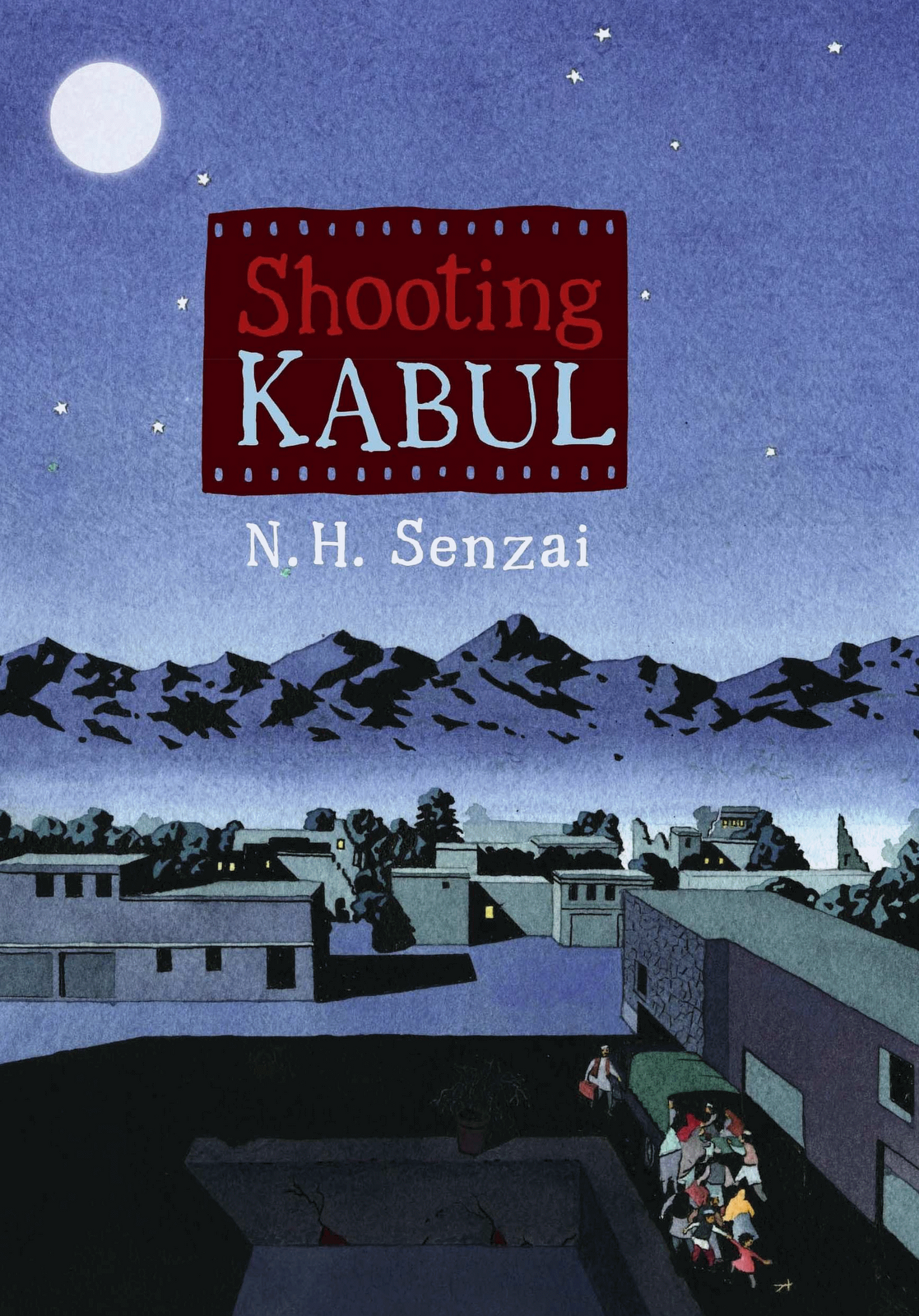
So needless to say I waited in great anticipation as the team at Simon and Schuster did their magic. During the process, I was tremendously appreciative of the fact that both my editor and the art director kept me in the loop on who they had chosen as the artist – the fabulous Yan Nascimbene, and showed me the first cuts. In order to make sure that the cover is accurate to Afghan culture and the look and feel of the subject matter, I made some comments, which were incorporated into the final design. In the end, I feel, it’s truly a collaborative effort. And here it is...